
Have you ever questioned the role of estrogen for your fertility? Most people relate the hormone estrogen to women. Estrogens are primary female reproductive messengers. Estrogen is essential for healthy bone formation, healthy gene expression, maintaining healthy cholesterol levels, and is vital for a healthy menstrual cycle.
How Estrogen Works
The first phase of the menstrual cycle is called the follicular phase. Throughout a woman’s life her ovaries contain thousands of follicles, and these follicles contain eggs. The pituitary gland begins releasing Follicle Stimulating Hormone (FSH) at the beginning of the menstrual cycle. The release of FSH signals some of the follicles in the ovary to begin maturing. As the follicles begin maturing they release an increasing amount of the hormone estrogen. The rising estrogen level signals the pituitary gland to curb release of FSH. Estrogen levels continue to rise and signal the pituitary gland to release Lutenizing Hormone (LH). LH surges, signaling the follicle to open and release the mature egg, this is ovulation. This is the ovulatory phase. Estrogen levels peak during this time, progesterone begins to increase.
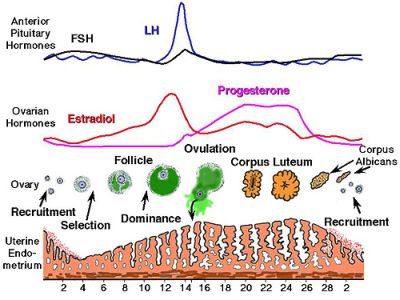
The closed follicle produces the corpus luteum. This phase is called the Luteal phase. The corpus luteum produces progesterone. Both estrogen and progesterone stimulate the uterine lining to thicken. Estrogen remains relatively high, though progesterone levels gradually increase in preparation for fertilization. If the egg is not fertilized, it gradually disintegrates, no longer producing progesterone and estrogen declines. This stimulates the uterine lining to shed, starting a new menstrual cycle.
Types of Estrogen: Natural & Synthetic
As more and more couples are diagnosed with infertility, more questions arise about estrogen’s role in infertility. With the advancement of science and technology, we have come to learn that there are human-made chemical toxins in our environment, known as endocrine disruptors. Some of these endocrine disruptors are called xenoestrogens. Xenoestrogens bind to our estrogen receptor sites, producing an estrogenic affect. And then there are phytoestrogens. Phytoestrogens are compounds found in plants, that also have the ability to bind to estrogen receptor sites and mimic our natural endogenous estrogens. Phytoestrogens have been shown to have a weaker estrogenic effect than our own endogenous estrogens, or xenoestrogens.
Endogenous Estrogen
These are natural estrogen’s our bodies produce. These are steroid hormones.
- Estrone (E1)– Estrone is more related to menopause. During the development of the reproductive stage and during reproductive phase for females, estrone is relatively low. It becomes higher during menopause. Estrone is produced by the ovaries and adipose tissue (fat).
- Estradiol (E2)– Estradiol is produced primarily by the follicles and corpus luteum in the ovaries. This estrogen is the most potent and abundant. Its main action is the involvement in development of secondary sex characteristics, and the menstrual cycle. For example, secondary sex characteristics for female humans would be the enlargement of breasts.
- Estriol (E3)– This is also known as estriol. This is produced during pregnancy by the placenta.
Xenoestrogens
These are a subclass of endocrine disruptors. Endocrine disruptors, also known as xenohormones, are human-made chemicals. These chemicals have the ability to interfere with the natural functions and development of our bodies. The main function of the endocrine system is to serve as our body’s message center. Hormones deliver messages, the endocrine system coordinates hormones.
Xenoestrogens have the ability to bind to our estrogen receptor sites; disrupting the function of the endocrine system. Not only can they mimic our natural hormones, but they can block other hormones from binding to receptor sites.
All xenohormones are endocrine disruptors. They can alter how natural hormones are produced, metabolized and eliminated.
Common known substances that have demonstrated estrogen mimicking effects on animals (including humans).
- Atrazine (weed killer)
- Butylated hydroxyanisole known as BHA (food preservative)
- 4-Methylbenzylidene camphor known as 4-MBC (sunscreen lotions)
- Erythrosine, FD&C Red No. 3, (food dye)
- Bisphenol A known as BPA (found in polycarbonate plastic and epoxy resin)
- Ethinylestradiol (combined oral contraceptive pill, this is released into the environment as a xenoestrogen through the urine and feces of women who use this contraception)
- Heptachlor and dieldrin, DDT (insecticides)
You may be thinking that DDT was banned in our country years ago, but it is not in other countries. Human-made chemical toxins impact us all; they are passed through our water, air, soil and food system. No matter where you live on this planet, you are impacted by this. In the United States alone, approximately 87,000 new synthetic chemicals have been produced since the 1940’s. Less than 3% of these chemicals have been tested for hormone disrupting properties.
Xenoestrogens are most commonly stored and concentrated in the fat cells in our bodies and other animals. This is important when considering how much fatty, non-organic meats you eat. Xenoestrogens are more concentrated in fatty meat products. As they move up the food chain, they become more concentrated. These endocrine disruptors are all around us. Xenoestrogens come from chemical pollution via plastics, body care products, household cleaning products, feminine care products, pesticides, herbicides, paint fumes, and petrochemicals.
Phytoestrogens
These are found in many plant foods we consume daily; seeds, beans, grains and in many medicinal plants. Phytoestrogens are not true estrogen, but they may have a similar action to our own endogenous estrogens. Phytoestrogens exert weaker estrogenic effects on cells, compared to endogenous estrogens, or xenoestrogens. Phytoestrogens have been shown to have an anti-estrogenic effect premenopausally. They do this by competing for hormone receptor sites. If they bind to the estrogen receptor sites first, they actively block xenohormones from binding. This occupies the receptor sites with less estrogenic phytoestrogens, which protects the receptor sites from much stronger xenohormones.
The most important question that came to my mind, when I learned the above information was, “How are phytoestrogens good for us when they are also blocking our own good endogenous estrogen?” The answer lies in xenohormones. Most natural health care practitioners will agree, it is best to protect our estrogen receptor sites from chemical xenoestrogens through eating a whole food, nutrient dense diet naturally rich in phytoestrogens. We live in a time unlike any other for humanity. Humans, hundreds-to-thousands of years ago, did not have to deal with xenohormones like we do today.
In menopausal and post-menopausal women, estrogen naturally declines as the ovaries move into a resting phase. Studies have shown that populations that ate greater amounts of phytoestrogens, had women who were menopausal that had sustained bone density, fewer menopausal symptoms, and a lower incidence of breast cancer.
Types of phytoestrogens in order of strength
- Isoflavones– most commonly found in soy. Other sources are Red Clover, Alfalfa. Isoflavones are often found in the legume family, Fabacea. Because of the way soy products are produced, marketed and sold, we feel that soy products in the diet contain concentrated forms of phytoestrogens, which may lead to estrogen dominance.
- Lignans– most commonly found in flax and sesame seeds.
- Flavanoids– powerful antioxidants and anti-inflammatory effects, with weak estrogenic effects. Found in most yellow, red, purple and black fruits. Found in Royal Jelly as well.
- Coumestrol– found in high concentrations of sprouted soy and red clover.
Note: It is important to know that in order for phytoestrogens to be metabolized by the body properly, healthy intestinal flora is essential. Be sure that you are also consuming healthy pre-biotics, and probiotics such as fermented foods like kimchi, saurkraut, kombucha, yogurt, and kefir.
What About Estrogen Dominance or Low Estrogen?
Estrogen dominance can happen for many reasons:
- Commercially raised meats and dairy contain large amounts of estrogens and consuming them can cause hormonal imbalance.
- Pollution and stress mimic estrogen at the estrogen receptor sites.
- Eating a large amount of processed soy products can also mimic estrogen.
- PCOS and endometriosis can also have an estrogen dominate action.
Symptoms of Estrogen Dominance
Symptoms of Low Estrogen
When you compare both lists, it can be confusing; this is because many of the same symptoms of estrogen dominance are the same, or similar to low estrogen. Many women who are estrogen dominant are also progesterone deficient. If you suspect any hormonal imbalance, you may want to talk to your doctor about hormone testing. It is extremely hard to solve fertility issues, if you are not exactly sure if the fertility issue is hormone related or not. If you have been trying to get pregnant for over a year, hormone testing may help determine if there is an imbalance.
Natural Therapies for Estrogen Balance
Rather than work to manipulate estrogen levels, it may be best to work on nourishing the endocrine system with fertility superfoods, as well as consuming whole food sources of phytoestrogens. If you have estrogen dominance, the goal should be to avoid xenoestrogens, cleanse the body of endocrine disruptors, nourish the endocrine system, and promote healthy hormonal balance.
Fertility Cleansing
The Fertility Cleanse is a special cleanse that uses specific herbs, foods, and techniques to help your body to detoxify the body and uterus prior to becoming pregnant.
It is important to cleanse toxins from your body as much as possible, prior to conception and breastfeeding. Your body will use fat stores during pregnancy and breastfeeding, which go directly to your baby. Exercise and fertility cleansing are two essential tools to aid the body in the removal of toxins in preparation for pregnancy! Xenohormones that come from chemical pollution via plastics, body care products, household cleaning products, feminine care products, pesticides, herbicides, paint fumes, petrochemicals need to be avoided and cleansed from the body.
The liver is responsible for hormone metabolization, and excretion via bile. If we are unable to metabolize and excrete hormones properly, they will stay in our body and be stored in our fat cells. Exercise helps to reduce fat in the body and promotes natural cleansing through sweat. Most toxins are stored in our liver, kidneys and fat cells. In addition, sweating and drinking plenty of water during the Fertility Cleansing phase is essential to complete removal of toxins/excess hormones. Consider sauna, hot baths, aerobic exercise. Rinse the body with cold water after sweating. Drink plenty of clean filtered water in glass, ceramic, or stainless-steel containers.
Avoid Exposure to Xenohormones
Eat Organic: Conventional produce contains harmful herbicides and pesticides which have been shown to negatively affect both male and female fertility. Depending on how they were grown, studies have also shown organic vegetables and fruits may have more nutritional value.
Avoid Plastics: Plastics leach xenoestrogens into our food, water and bodies. Never heat your food in plastics. When plastics are heated they release xenoestrogens directly into your food, in more concentrated levels, which mimic estrogen in the body. Choose glass or stainless steel storage containers, pots, and pans!
Use Natural Feminine Care Products: Most feminine care products contains tons of xenohormones. This is because they are made up of human-made chemicals including: polyester, polypropylene, propylethylene, and dioxin. These are all known endocrine disruptors. There are many natural options available!
Use Natural, Organic body products: Most conventional body products contain a wide variety of xenohormones, including chemical preservatives, fragrance and dyes.
Choose Organic Gardening and Yard Care Practices: This is one of the best ways to avoid pesticides, chemical fertilizers, and herbicides. You will also be protecting the environment from xenohormones when you choose organic practices.
Consume Adequate Amounts of Fiber and Phytoestrogen Foods
Eat fiber with each meal to help keep the blood sugar levels balanced. Fiber also removes excess estrogens from the body. Good sources of fiber are vegetables, beans, seeds (especially flax and sesame), nuts, and whole grains. Phytoestrogens are found most often in the legume family, which is the bean family. Consume beans, seeds, sprouted foods, and whole grains. Phytoestrogens can also be found in herbs such as Red Clover, Alfalfa and Licorice Rt. Drinking daily herbal infusions of these herbs may aid in estrogen balance.
Consuming a whole food nutrient dense diet rich in fresh vegetables, fruits, whole grains, beans, dark leafy green vegetables and herbs, as well as minimal organic meat and dairy consumption, has been found to be very beneficial for fertility health.
Learn More About the Benefits of DIM
DIM may be one of the easiest and best ways to promote healthy estrogen balance. DIM, which stands for diindolylmethane, comes from the plant chemical I3C, short for indole-3-carbinol. DIM stimulates the body to metabolize bad estrogens, not your good ones. For estrogen to be modified into its final form before passing out of the body (removal) it has to be combined with oxygen for aerobic metabolism. DIM increases specific aerobic metabolism for estrogen, this in turn multiplies the chance for estrogen to be broken down into good beneficial estrogen metabolites (2-hydroxy estrogen). When the good estrogen metabolites are increased by the DIM, this creates a reduction in bad estrogen (16-hydroxy estrogen) which have the potential to cause cancers, endometriosis, uterine fibroids. Good estrogen metabolites protect the heart and brain with antioxidant activity. Increased bad estrogen may be promoted by obesity and exposure to man-made environmental toxins. DIM promotes healthy estrogen metabolism. For DIM to be effective, it must be taken with food.
Royal Jelly for Hormonal Balance
Regular consumption of high-quality Royal Jelly has been shown to help balance hormones. Royal Jelly may be beneficial for those individuals that desire to promote hormonal balance, as it helps to provide support to the endocrine system. It may also help with problems that are related to hormonal imbalance. A study done in Japan and published in 2007 shows that Royal Jelly has the propensity to mimic human estrogen, which may help those that suffer from low estrogen levels. Estrogen is essential for healthy bone formation and healthy gene expression and is vital for a healthy menstrual cycle. Because Royal Jelly has the propensity to mimic estrogen, it is similar to phytoestrogens, which have been found to protect the body from xenohormones and estrogen dominance.
Support the Endocrine System with Maca
In women, maca aids the body by helping to control estrogen in the body. Estrogen levels that are high or low at the wrong time can keep a woman from becoming pregnant or keep her from carrying to term. Taking maca may help to increase the progesterone levels which are essential to carrying a healthy pregnancy.
Too much estrogen in men produces erectile dysfunction or lack of libido, low sperm count, and lowered production of seminal fluid. Men who use maca have been seen to have an increased libido and healthy sperm.
Maca is an adaptogen herb, that supports healthy endocrine system function, aiding both the pituitary, adrenal, and thyroid glands (all involved in hormonal balance). Adaptogens increase resistance to mind-body stress and enhance overall vitality and health through non-specific endocrine (known as hormone/stress glands) support. Plants recognized as adaptogens help to normalize the bodies functions even during diseased states, are non-toxic, nutritive, and have been deemed safe for long term use.
Key Points to Remember
We must realize that we live in a time where there is more chemical pollution than at any other time in the history of humanity. Because of this, there are more fertility issues. In order to bring about balance, we must change the way we view life. Take control of your fertility through healthy lifestyle choices. In order to have balanced estrogen levels in the body, we must change how and what we consume. This means internally and externally. There is hope through change and awareness. There are many allies for estrogen balance; whole foods, herbs, bee products, and education!
Too learn more about related subjects covered in this article, please visit the following links:
Click here to learn more about Follicle Stimulating Hormone (FSH) as mentioned in the beginning of this article.
Click here to learn more about Xenohormones, their effects on Fertility, and how to support your body from exposure.
“The next major advance in the health of the people will be determined by what the individual is willing to do for himself.”
-John Knowles, Former President of the Rockefeller Foundation
- Blankespoor, J. (n.d.). Phytoestrogens Demystified. Retrieved from: https://chestnutherbs.com/phytoestrogens/
- Menstrual Cycle – Women’s Health Issues. (n.d.). Retrieved from: https://www.merckmanuals.com/home/women-s-health-issues/biology-of-the-female-reproductive-system/menstrual-cycle
- Symptoms of Low Estrogen Levels. (n.d.). Retrieved from: http://www.natural-hormones.net/estrogen-symptoms-low-levels.htm
- Estrone. (n.d.). Retrieved from: https://www.merriam-webster.com/dictionary/estrone
- Estrogen. (n.d.). Retrieved from: https://www.merriam-webster.com/dictionary/estrogen