
Celiac disease is a digestive disorder that causes damage to the small intestine, resulting in an interference of the body’s ability to properly absorb nutrients from food. The Natural Fertility Diet can easily be made gluten-free, so please read on to learn why this may be important.
Celiac disease affects about 1 out of 133 people, though many people that have the condition are not even aware of it. If proper attention is not paid to the disorder and a gluten-free diet is not followed, many health problems can occur, including infertility.
The Gluten-Free Diet
People that suffer from celiac disease are unable to digest and process gluten, which is a protein that is found in many grains like barley, rye and wheat. There are many food products on the market that contain gluten, and when these products are consumed by an individual with celiac disease, a variety of symptoms can occur.
Unfortunately, many of the symptoms that present themselves from celiac disease are symptoms that are common with other digestive issues like irritable bowel syndrome, diverticulitis and inflammatory bowel disease. As such, in many cases the celiac disease is not properly diagnosed so it is not properly treated.
People that suffer from celiac disease must follow a gluten-free diet. When they eat foods containing gluten, their body’s own immune system actually begins to destroy the small intestine which prevents proper absorption of nutrients from food that can lead to a variety of health concerns.
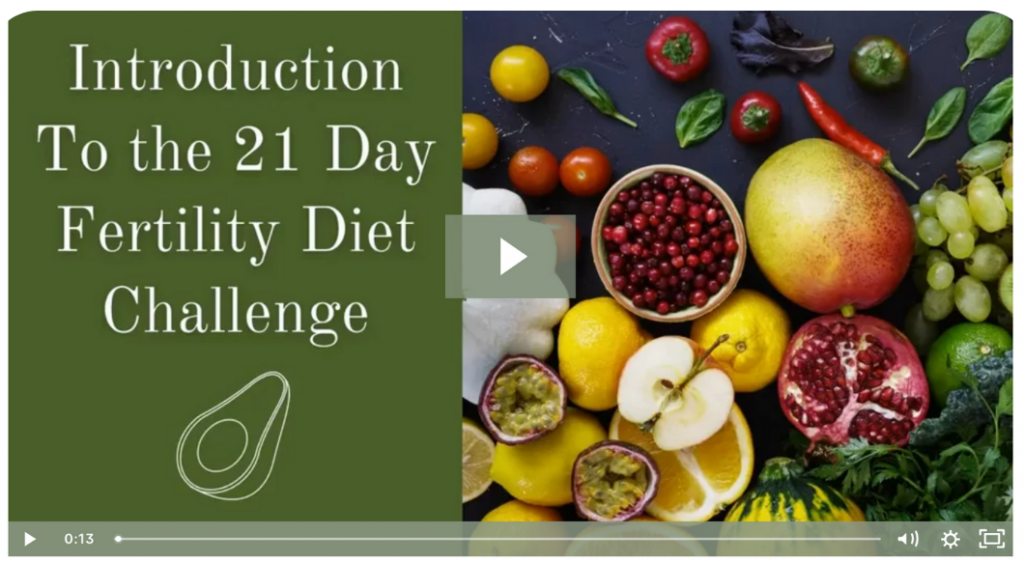
Watch The Introduction to the 21 Day Fertility Diet Challenge
- Learn how to transition to a natural fertility diet by focusing on the important 5
- Get all the details on how to use nutrition as a tool for hormonal health, cell protection and fertility wellness
- An effective tool to help your tastebuds transition towards healthier foods
- Learn which foods are most important for fertility and how to regularly eat them
The Gluten-Free Diet and Fertility
The longer that celiac disease goes untreated, the higher the risks are of developing problems with fertility and conception. Clinical studies have shown that women with untreated celiac disease have a very high rate of infertility with difficulties in conceiving. Untreated celiac disease also seems to affect a man’s fertility as it creates a hormonal imbalance that causes reproductive disturbances.
The largest concern in women with untreated celiac disease is the high risk of miscarriage the condition seems to cause. In a case study performed on a group of women ages 22-38 years of age with untreated celiac disease, all suffered from recurrent miscarriages over a course of 11 years. All of the women were placed on a gluten-free diet and evaluated for the long-term to determine the effect of the gluten-free diet on their fertility. Out of the 13 women, 6 became pregnant within 1-4 years after starting the gluten-free diet with one having a successful multiple birth.
There is no evidence showing that a gluten-free diet will help the fertility of a woman that does not have celiac disease, though there is significant evidence that those women that do will benefit greatly from the change in diet. Not only can switching to the gluten-free diet help to improve the ability to conceive, but it also improves the woman’s ability to carry the pregnancy full-term.
If you have been diagnosed with celiac disease and have difficulties with fertility, it is essential to switch to the gluten-free diet to improve fertility. If you have been diagnosed with another digestive disorder and are having problems conceiving, it may be worthwhile to be tested for celiac disease if you have not already done so to make sure a proper diagnosis has been made that can help you make any necessary changes to your diet if you do in fact suffer from the disease.
- Infertilityandmiscarriage2 – jccglutenfree. (n.d.). Retrieved from: http://jccglutenfree.googlepages.com/infertilityandmiscarriage2
- Celiac Disease | NIDDK. (n.d.). Retrieved from: https://www.niddk.nih.gov/health-information/digestive-diseases/celiac-disease